Historic agreement could change the face of identified informal settlements in Cape Town
23 November 2025
An historic Memorandum of Agreement has been signed between the City and partner NGO Urban Think Tank Empowerment (UTTE) for the community-led upgrade of identified informal settlements across areas of Cape Town. This is one of the interventions that the City believes could change the face of informality in the identified informal settlement areas in the future.
‘What is happening here is really special, and the pilot project in BTT Section and Vukani informal settlements in Site C Khayelitsha is just the beginning, as we plan to tackle the upgrading of identified informal settlements in other metro areas at scale. Spread over three phases, this innovative community-led upgrade programme is foreseen to improve the lives of more than 5 000 households.
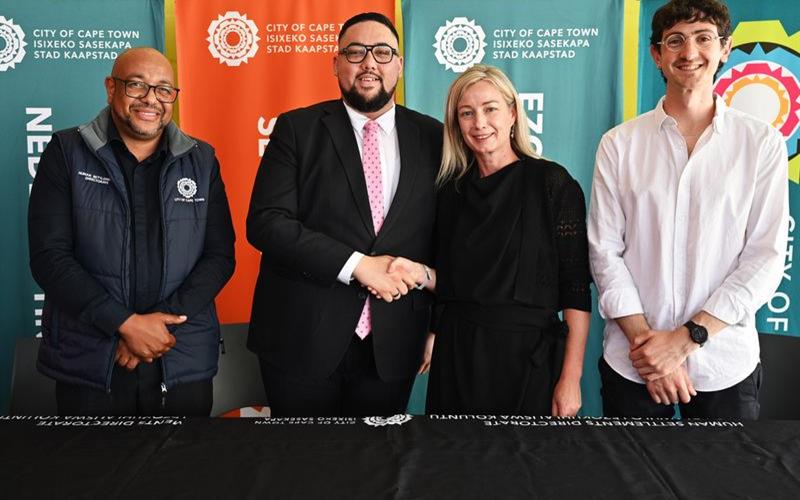
‘And the historic partnership agreement that the City has just signed with UTTE holds great potential for similar partnership roll outs with other organisations. The City’s Human Settlements Strategy is specifically founded on the principle of partnership across types of housing delivery – where the City plays an enabling role to unlock and drive housing delivery at scale. A local government on its own simply cannot solve the housing challenges. Teamwork is absolutely necessary, and a private-public partnership, community-led approach enhances the chances of success.
‘As a City we have been working with partners in areas such as Khayelitsha and others for more than a decade to enable community-led upgrade projects. We continue to explore all avenues to find ways to provide hope and dignity through affordable housing of all types, and especially in our informal settlements faced with high health and safety risks. Even now again as we move into summer with gale force winds and hot weather the fire risk for our informal settlements residents is constant. Expanding service delivery and upgrading informal settlements on a much larger scale to enhance health and safety remains crucial. We will bring the change we want to see and we will build Cape Town together,’ said the Human Settlements Mayoral Committee Member, Councillor Carl Pophaim.
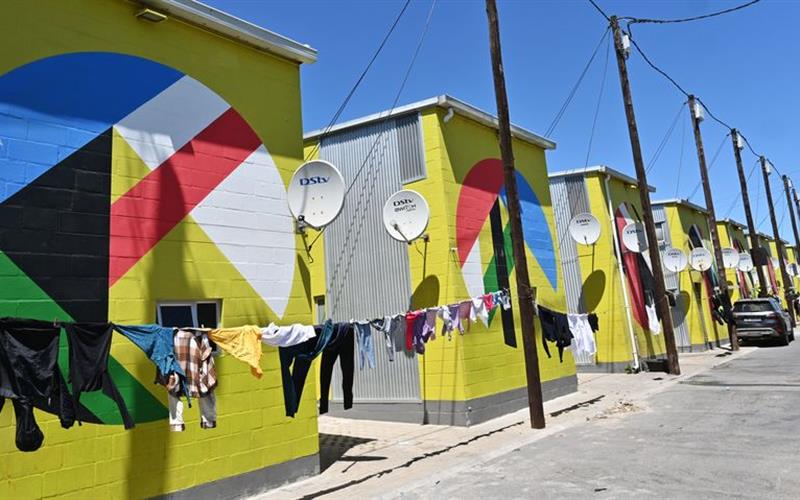 BT Soweto Pilot Project in brief – innovation, community-led
• 72 row-house duplexes built, enhances space and safety
• Four commercial facilities provides income generation and spatial activation
• One Community Centre housing a crèche, football academy, tutoring facilities, urban farm and ancillary facilities for support, gathering and community building
• Playground and public open space
UTTE Managing Director, Delana Finlayson
‘We’re super excited to sign this partnership with the City to significantly change housing conditions in informal settlements. We have a proven model that works and we are ready sot scale it up with our partner, the City,’ said Finlayson.
Soweto settlement Site C Khayelitsha resident: Mr Phumezo Tsibanto
‘I was staying for 20 years in a structure that was terrible, wooden and dangerous. We worked with the organisation and City for the new houses. I feel I am in a safe place, I feel secure in my new home and even the employment, the people who were working here were local,’ said Mr Tsibanto.
City
• assists with all civil infrastructure and service installation
• reserves and manages the site for the work to be done
• assists with subsidy administration and registration
• funds and develops bulk infrastructure
• helps with development management and planning processes
Partner UTTE
• Trust building and a ‘bottom-up’ approach to create a site-specific solution
• Local construction labourers employed from the community
• Socio-spatial sense unlocked for stability, belonging and identity for residents as well as a generational asset and opportunity to break the cycle.
• The spatial development model at its essence replaces each single storey structure with a similar or greater home area by building row-house typology duplex units, through which contextual risks– typically from township flooding and fire damage as well as socio-economic opportunistic crimes – can be reduced. The site area is optimised through spatial planning and additional social support facilities in public open spaces, playgrounds, ECDs, farms, gathering facilities, among others.
(Source: UTTE)
End
Published by:
City of Cape Town, Media Office